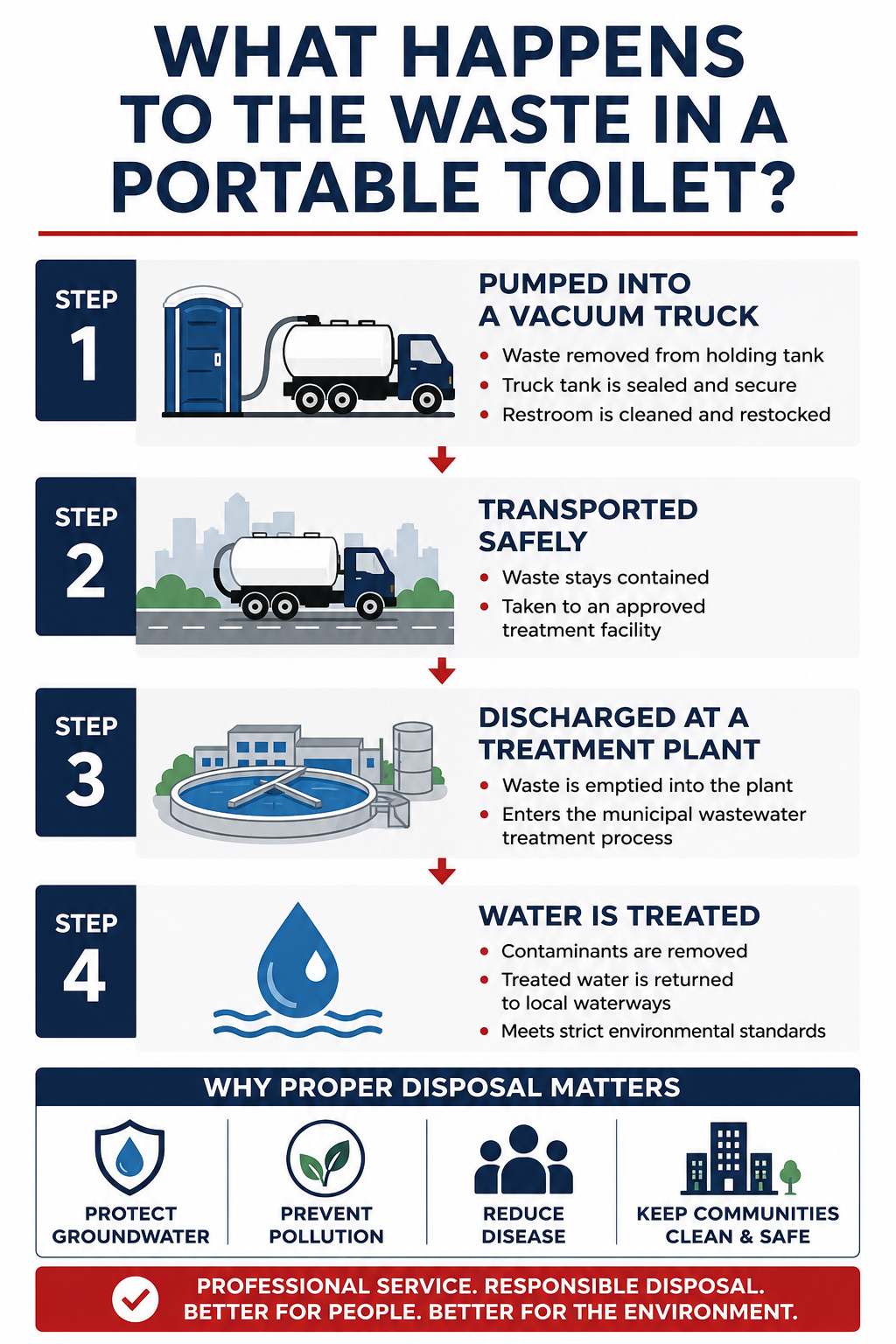
One of the questions we hear surprisingly often is: "What happens to the waste after you pump a portable toilet?"
It's a fair question. Most people see the portable restroom arrive on site and later watch the service truck pump it out, but very few know what happens next. The answer is actually much simpler than most people expect.
Step 1: The Waste Is Pumped Into a Vacuum Truck
When we service a portable toilet, a high-powered vacuum pump removes the contents of the holding tank and transfers it into a sealed waste tank on our service truck.
At the same time, we:
Clean the interior of the restroom
Refill the holding tank with fresh water and deodorizer
Restock toilet paper and supplies
Inspect the unit to ensure it's ready for continued use
This process is repeated on a regular schedule to keep units clean and sanitary.
Step 2: The Waste Is Transported Safely
Once our truck's holding tank is full, or the day's route is complete, we transport the collected waste to an approved wastewater treatment facility.
The waste remains contained inside the truck throughout transport, helping prevent spills, odors, and environmental contamination.
Step 3: The Waste Is Discharged at a Wastewater Treatment Plant
Portable toilet waste is not dumped in a landfill or discarded in the environment.
Instead, it is emptied into a municipal wastewater treatment plant, where it enters the same treatment process used for wastewater from homes, businesses, schools, and other buildings connected to the sewer system.
From that point forward, it becomes part of the community's normal wastewater treatment process.
Step 4: The Water Is Treated
Wastewater treatment plants remove contaminants through a series of physical, biological, and chemical treatment processes.
While the exact treatment process varies by facility, the goal is always the same:
Protect public health
Protect local waterways
Meet environmental regulations before treated water is released
These facilities are heavily regulated and operate under strict environmental standards.
Why Proper Disposal Matters
Portable restroom waste can't simply be emptied anywhere.
Licensed sanitation providers must dispose of waste at approved facilities that are equipped to safely process wastewater.
Proper disposal helps:
Protect groundwater
Prevent pollution
Reduce the spread of disease
Keep communities clean and safe
Responsible disposal is one of the most important parts of professional portable restroom service.
It's More Similar to Your Home Than You Might Think
Many people assume portable toilet waste is handled differently than household sewage.
In reality, once it's delivered to a wastewater treatment plant, it follows essentially the same treatment process as wastewater from homes and businesses.
The biggest difference is simply how it gets there.
Instead of traveling through underground sewer pipes, it's transported by vacuum truck.
Professional Servicing Makes the Difference
A clean portable restroom isn't just about appearances.
It depends on:
Regular pumping
Proper cleaning
Responsible transportation
Environmentally responsible disposal
Every step helps ensure portable restrooms remain safe, sanitary, and reliable for construction sites, outdoor events, parks, and emergency response efforts throughout Middle Tennessee.
Curious About Portable Restroom Service?
At Eagle Site Services, we're always happy to answer questions about how portable restrooms work and what goes into keeping them clean.
If you're planning a construction project or outdoor event in Middle Tennessee, contact us today to learn more about our portable restroom services and scheduled maintenance programs.