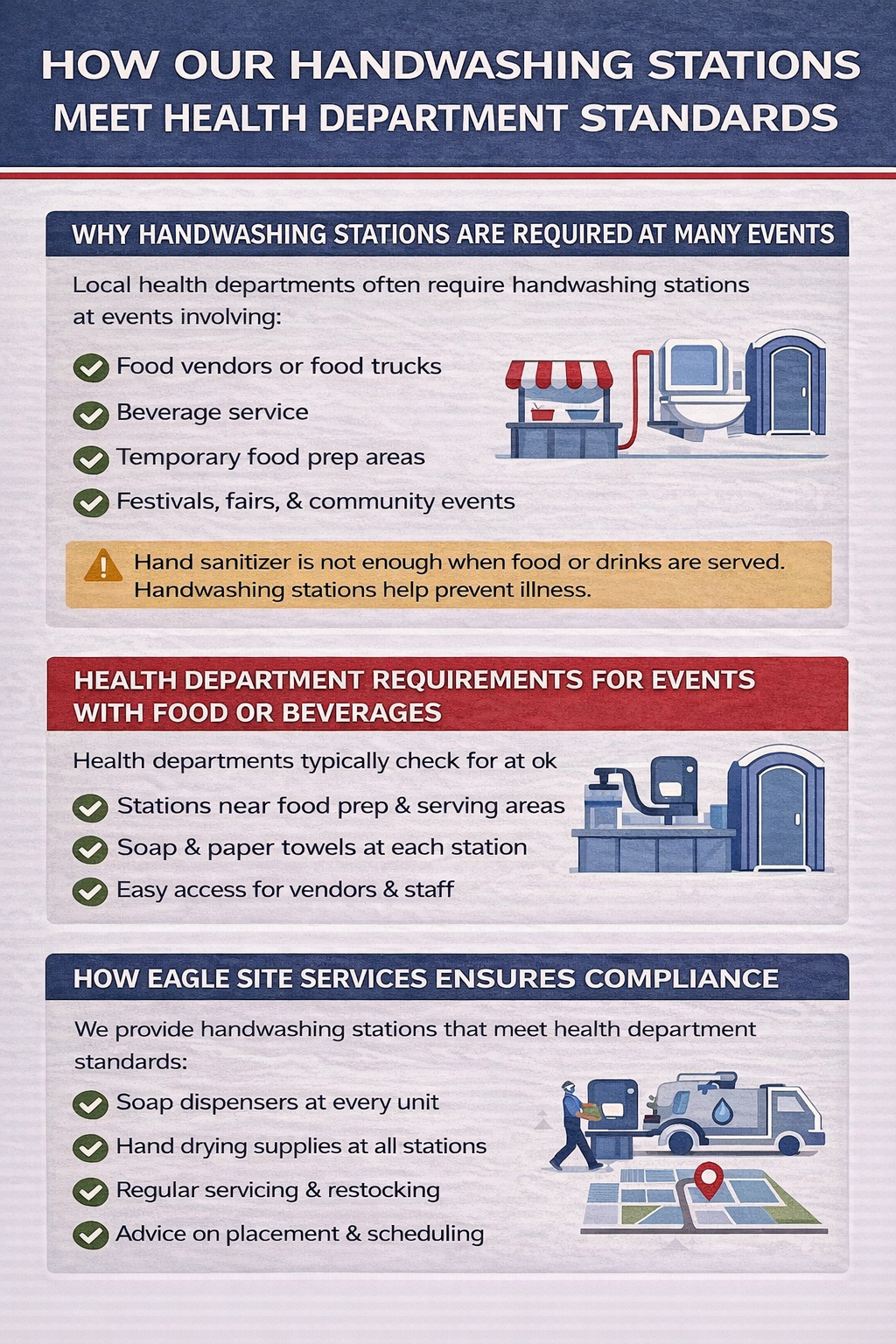
How Our Handwashing Stations Meet Health Department Standards For Events
When you’re planning an outdoor event, festival, or gathering in Middle Tennessee, sanitation isn’t just about convenience, it’s often part of meeting local health department expectations. In many cases, especially when food or drinks are involved, handwashing stations are required to support public health and event compliance.
Here’s what you need to know about handwashing station requirements for outdoor events, and how Eagle Site Services helps event organizers meet those standards with confidence.
Why Handwashing Stations Are Required at Many Events
Hand hygiene plays a critical role in preventing the spread of illness at events where large numbers of people gather. Because of this, local health departments frequently require handwashing stations at events that include:
Food vendors or food trucks
Beverage service
Temporary food preparation areas
Festivals, fairs, and community events
While hand sanitizer is commonly used and encouraged, handwashing stations are typically required when food or drinks are present, especially in vendor and preparation areas. Sanitizer alone does not replace handwashing in these situations.
Health Department Guidelines for Outdoor Events
Most local health departments follow guidance based on the FDA Food Code, which serves as the model used nationwide for food safety at temporary events. While exact enforcement varies by jurisdiction, the expectations are generally consistent.
For events with food or beverage service, health departments typically require:
Designated handwashing stations near food preparation and serving areas
Soap available at each station
A way for users to dry their hands
Stations that are easily accessible to vendors and staff
Health inspectors may check for proper handwashing access during event setup or while the event is in progress.
Handwashing vs. Hand Sanitizer at Events
Hand sanitizer is a useful and effective tool for general hygiene, especially for attendees moving throughout an event. However, when food or drinks are being handled, handwashing stations are required because they allow for proper cleaning of hands before food preparation and service.
For most outdoor events, the recommended approach is:
Handwashing stations for food vendors, staff, and guests before preparation and consumption
Hand sanitizer stations for general public use to maintain overall sanitation
This combination supports both compliance and convenience.
Placement Matters for Compliance
Where handwashing stations are placed can be just as important as having them at all. For events, stations should be:
Located near food vendors or food prep areas
Easy to access without blocking foot traffic
Clearly visible and available throughout the event
Proper placement helps vendors stay compliant and makes inspections smoother.
How Eagle Site Services Supports Event Compliance
At Eagle Site Services, we understand what local health departments look for during outdoor events. Our handwashing stations are designed and maintained to support those expectations, including:
Soap dispensers at every unit
Hand drying supplies
Regular servicing to keep stations clean and stocked
Guidance on placement based on your event layout
We work with event organizers to make sure handwashing is handled correctly, so it’s one less thing you have to worry about during setup or inspections.
Planning Ahead Makes All the Difference
Health department requirements can vary depending on the size and type of event, as well as the number of food vendors involved. Planning handwashing stations early helps avoid last-minute issues and ensures your event stays on track.
If you’re unsure how many stations you need or where they should go, it’s always better to ask ahead of time.